Proofy Web App
My Role
Team Members
Tools Used
Timeline
Background
The Challenge
Information Architecture
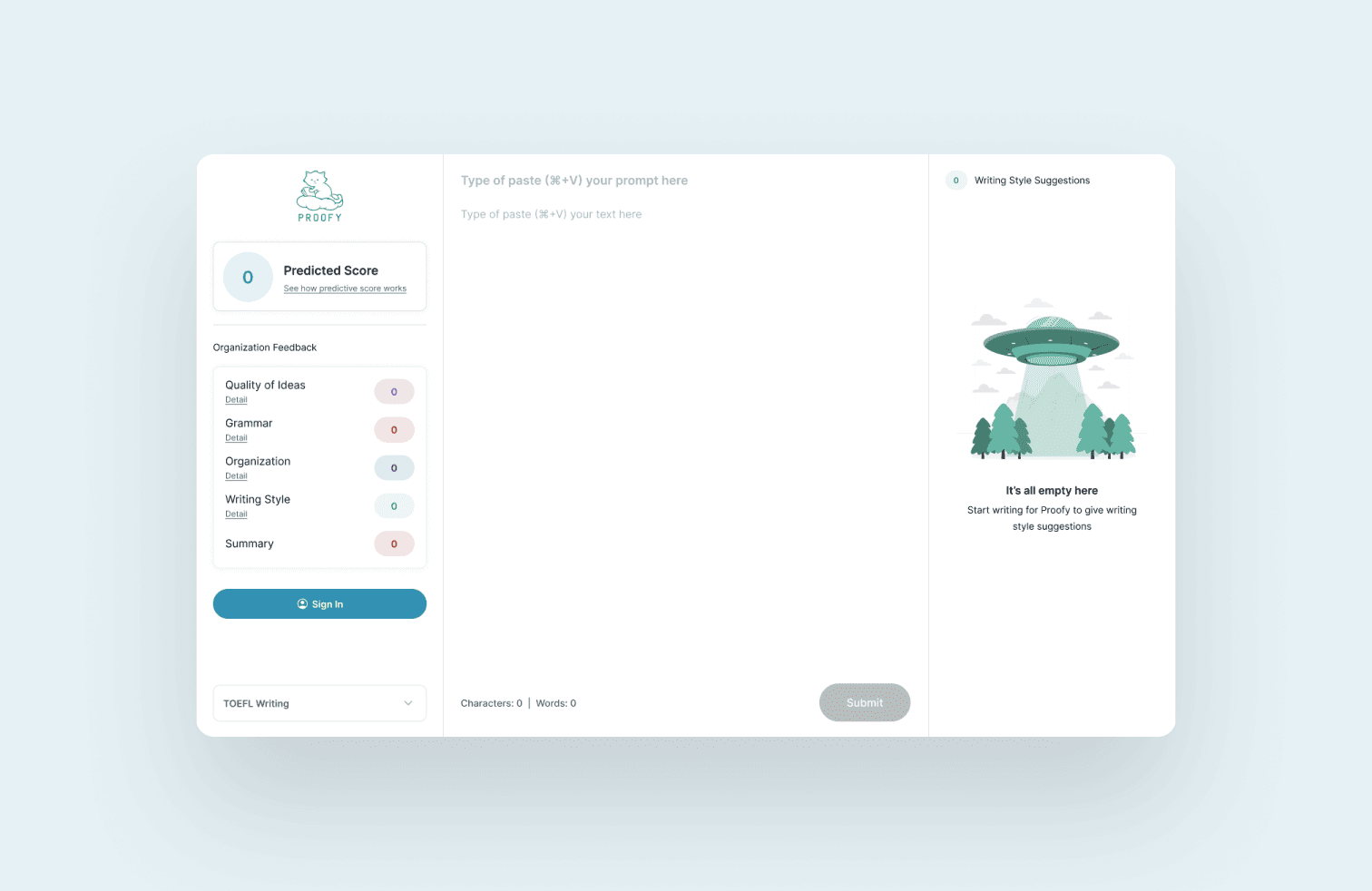
Proofy is an AI-powered TOEFL writing evaluator designed to help students improve their essays with precision. It provides instant feedback on grammar, structure, and idea flow, making revisions smarter and more effective. By blending AI guidance with human-like evaluation, Proofy supports learners in boosting their test scores with confidence.
I architected, designed, and prototyped the entire app, shaping it into a pixel-perfect AI writing coach from scratch. My work included defining the product flow, building intuitive interfaces, and ensuring the user experience aligned with the needs of students preparing for TOEFL. This project reflects my ability to combine product thinking, design, and prototyping into a functional, AI-driven learning tool.
Research & Exploring the Structure
User interviews were conducted by the core team in Tennessee. While I wasn't present for the sessions, I synthesised the findings with the team to align on which workflows were essential for mobile and which were better suited to remain on desktop. This conversation became the foundation for every structural decision that followed.
With the scope defined, three structural approaches were explored:

Assessments, sessions, and goals as separate destinations linked by session IDs. Familiar, but required jumping across sections to complete one task.

Navigation simplified, bottom nav removed, but the three still lived independently. Less clutter, same fragmentation.

Everything was organised within the session itself. One entry point, one context, no jumping between sections.
Option 3 was chosen because it matched how patients naturally think about their care: in terms of sessions, not categories. If a patient wants to do anything related to one session, they go there and nowhere else. It also clarified the mobile scope — the session was the sole task we wanted to support on mobile. Everything else that felt too complex was intentionally left on desktop.
Interactive Prototype

Proofy Web App
My Role
Team Members
Tools Used
Timeline
Background
The Challenge
Information Architecture
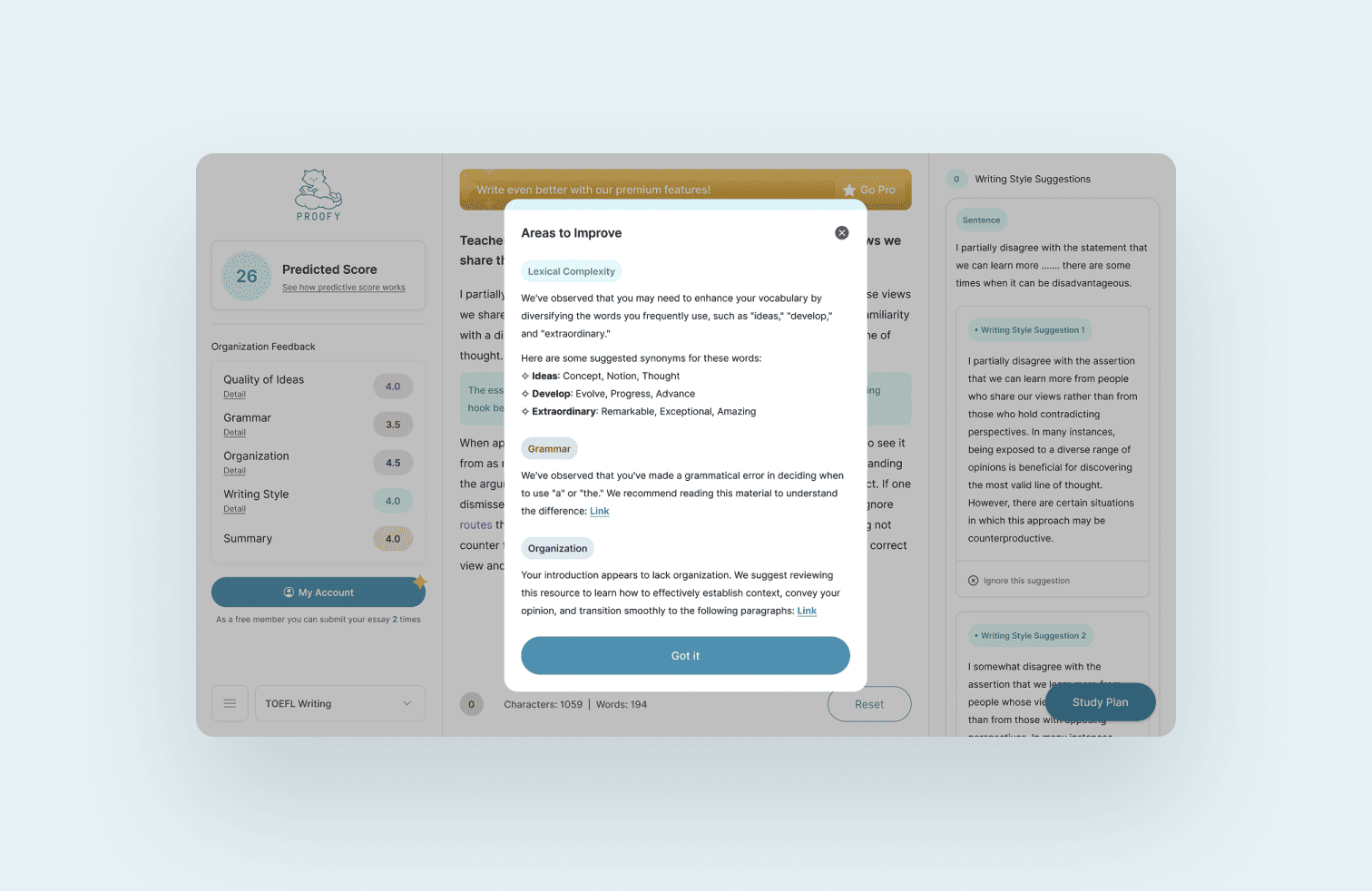
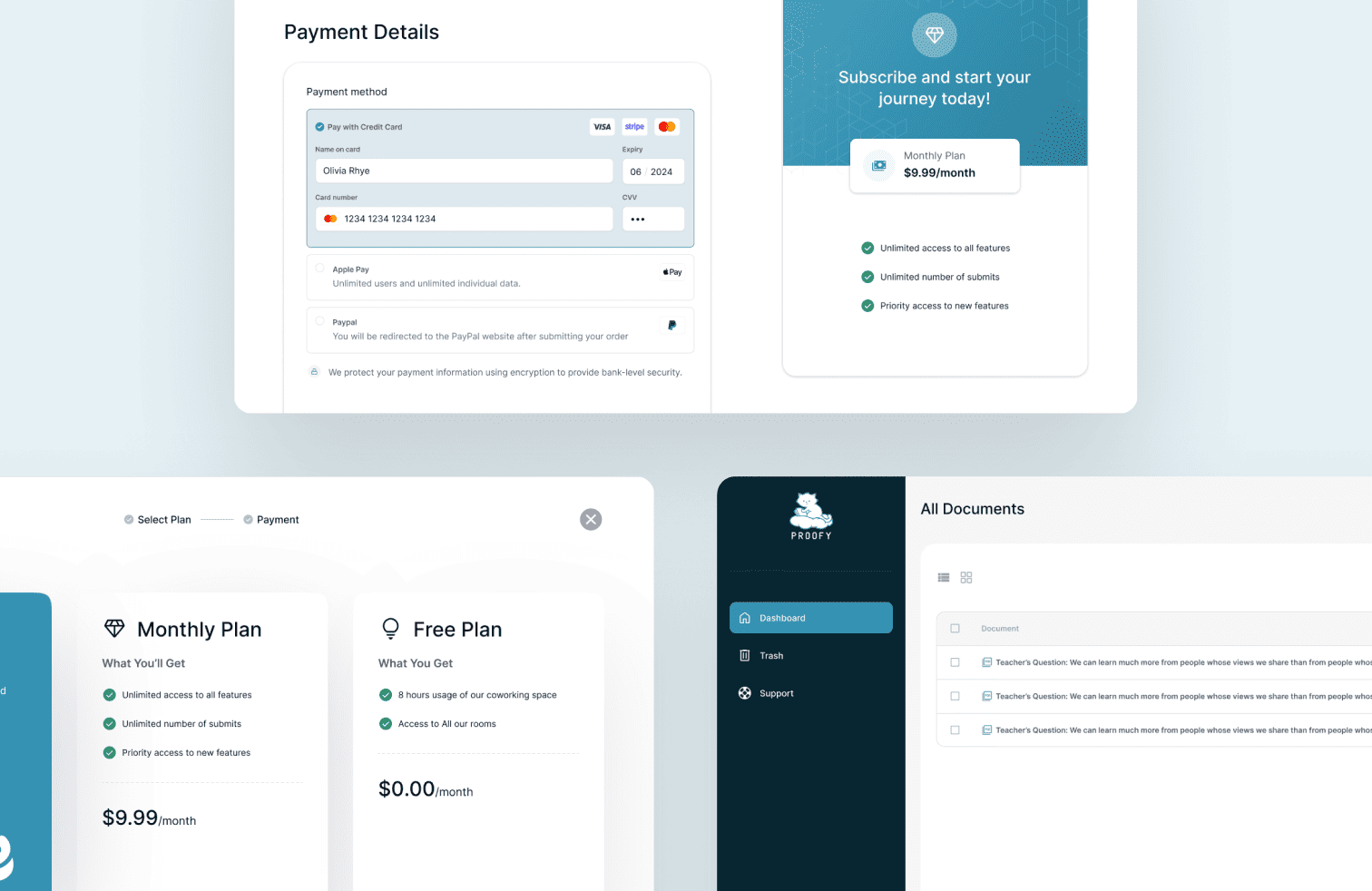
Proofy is an AI-powered TOEFL writing evaluator designed to help students improve their essays with precision. It provides instant feedback on grammar, structure, and idea flow, making revisions smarter and more effective. By blending AI guidance with human-like evaluation, Proofy supports learners in boosting their test scores with confidence.
I architected, designed, and prototyped the entire app, shaping it into a pixel-perfect AI writing coach from scratch. My work included defining the product flow, building intuitive interfaces, and ensuring the user experience aligned with the needs of students preparing for TOEFL. This project reflects my ability to combine product thinking, design, and prototyping into a functional, AI-driven learning tool.
Research & Exploring the Structure
User interviews were conducted by the core team in Tennessee. While I wasn't present for the sessions, I synthesised the findings with the team to align on which workflows were essential for mobile and which were better suited to remain on desktop. This conversation became the foundation for every structural decision that followed.
With the scope defined, three structural approaches were explored:
Assessments, sessions, and goals as separate destinations linked by session IDs. Familiar, but required jumping across sections to complete one task.
Navigation simplified, bottom nav removed, but the three still lived independently. Less clutter, same fragmentation.
Everything was organised within the session itself. One entry point, one context, no jumping between sections.
Option 3 was chosen because it matched how patients naturally think about their care: in terms of sessions, not categories. If a patient wants to do anything related to one session, they go there and nowhere else. It also clarified the mobile scope — the session was the sole task we wanted to support on mobile. Everything else that felt too complex was intentionally left on desktop.
Interactive Prototype